
Portuguese custard tarts, also known as pastéis de nata, are one of those desserts that look fancy but are actually pretty simple to make at home.

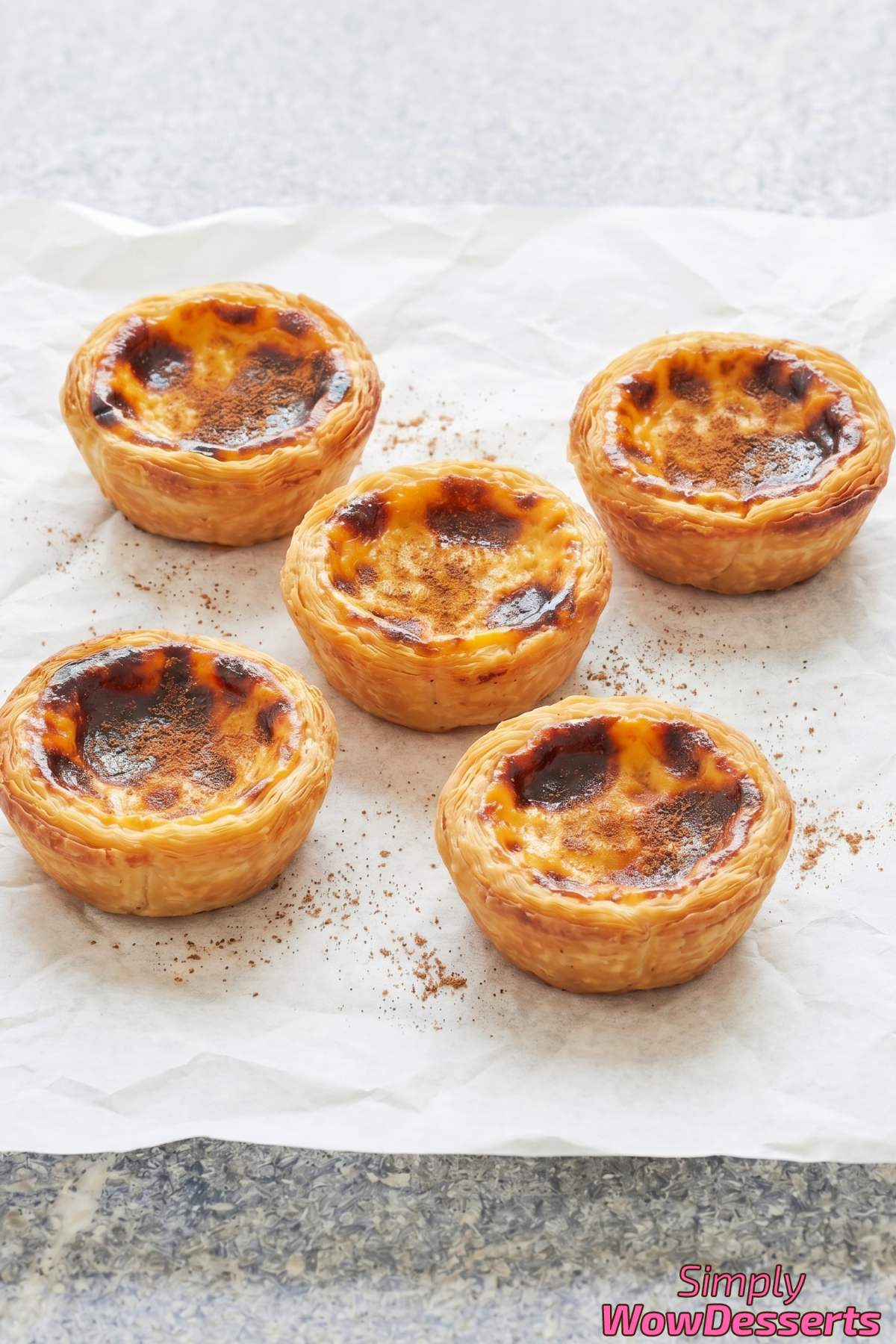
The custard is creamy and smooth, with a nice hint of lemon and cinnamon. The pastry is flaky and crisp, with those classic dark spots on top that you get from baking at high heat.
I love making these on weekends when I want something a little special with my coffee. They taste just like the ones you’d find in a small bakery in Lisbon.

The trick to getting the right look is a really hot oven. That’s what gives the tops their golden, blistered finish.
Don’t worry if your first batch isn’t perfect. Once you get the hang of pressing the pastry into the muffin tin, the rest is easy.
Why You’ll Love It
Authentic Lisbon Flavor – The lemon peel and cinnamon stick steep into the milk to create that real pastel de nata taste.

Signature Blistered Tops – Baking at 475°F gives the custard those dark caramelized spots you see in Portuguese bakeries.
Shortcut with Puff Pastry – Store-bought puff pastry rolled into a log mimics the flaky spiral layers without hours of folding dough.
Recipe Ingredients
For the Custard
- 1 cup Whole Milk
- 1 cup Heavy Cream
- 6 large Egg Yolks
- 3/4 cup Granulated Sugar
- 3 tbsp Cornstarch
- 1 tsp Vanilla Extract
- 1 strip Lemon Peel (about 2 inches)
- 1 Cinnamon Stick
For the Pastry
- 1 sheet Puff Pastry (thawed)
- Ground Cinnamon (for topping)
Directions
Step 1
Combine the whole milk, heavy cream, lemon peel, and cinnamon stick in a saucepan over medium heat. Bring to a gentle simmer, then remove from heat. Let it steep for 10 minutes, then remove the lemon peel and cinnamon stick.
Step 2
In a separate bowl, whisk together the egg yolks, granulated sugar, and cornstarch until smooth and pale. Slowly pour the warm milk mixture into the egg mixture while whisking constantly to temper the eggs.
Step 3
Pour everything back into the saucepan and cook over medium-low heat, whisking constantly, until the custard thickens and just begins to bubble, about 3 to 4 minutes. Remove from heat, stir in the vanilla extract, and press plastic wrap directly onto the surface. Let cool to room temperature.
Step 4
Preheat your oven to 475°F (245°C). Roll the puff pastry into a tight log from the long side. Cut the log into 12 equal rounds.
Step 5
Place each round cut-side up into a standard muffin tin cup. Use your thumbs to press the dough into the bottom and up the sides of each cup, making the walls thin and even. The pastry should come up to or just above the rim.
Step 6
Fill each pastry shell about 3/4 full with the cooled custard. Do not overfill, as the custard will puff during baking.
Step 7
Bake for 12 to 15 minutes until the pastry is deeply golden and the custard tops have dark, blistered spots. This high heat is what creates the signature charred look.
Step 8
Let the tarts cool in the pan for 5 minutes, then carefully transfer to a wire rack. Sprinkle lightly with ground cinnamon and serve warm or at room temperature.

My Tips
Get Your Oven Really Hot
The 475°F temperature isn’t a suggestion – it’s what gives these tarts their signature look. If your oven runs cool, crank it up to 500°F instead.
Let the oven preheat for at least 20 minutes before baking. A fully heated oven is what creates those dark, blistered spots on top of the custard that make these tarts look authentic.
If your oven has a top heating element or broiler setting, you can switch it on for the last 2 minutes to get extra char on the custard tops.
Temper the Eggs Slowly
When you pour the warm milk into the egg yolk mixture, do it in a thin stream while whisking constantly. If you dump it all in at once, the hot milk will cook the yolks and you’ll end up with scrambled eggs in your custard.
Start with just a few tablespoons of the warm milk to warm up the eggs, then slowly add the rest. This brings the egg temperature up gradually so they blend smoothly into the custard.
Cool the Custard Completely Before Filling
If you pour warm custard into the puff pastry shells, the butter in the dough will melt before it bakes and you’ll lose all those flaky layers. The pastry will turn out greasy and dense instead of crisp.
You can speed up the cooling by placing the bowl in an ice bath while stirring occasionally. Just make sure the plastic wrap is pressed directly on the custard surface so it doesn’t form a skin on top.
More Recipes
- Burnt Basque Cheesecake
- Churro Bites with Chocolate Dipping Sauce
- Creme Brulee Cheesecake
- Honey Lavender Panna Cotta
- Tres Leches Cake
Frequently Asked Questions
Why does my custard taste eggy instead of smooth and creamy?
An eggy taste usually means the custard wasn’t cooked long enough or the eggs weren’t tempered properly. Make sure to pour the warm milk into the eggs slowly while whisking constantly, so the eggs heat up gradually instead of scrambling.
Also, cook the custard until it actually thickens and just starts to bubble. That bubbling stage is important because it cooks out the raw egg flavor and activates the cornstarch fully.
Portuguese Custard Tarts

Equipment
- muffin tin
Ingredients
For the Custard
- 1 cup Whole Milk
- 1 cup Heavy Cream
- 6 large Egg Yolks
- 3/4 cup Granulated Sugar
- 3 tbsp Cornstarch
- 1 tsp Vanilla Extract
- 1 strip Lemon Peel (about 2 inches)
- 1 Cinnamon Stick
For the Pastry
- 1 sheet Puff Pastry (thawed)
- Ground Cinnamon (for topping)
Instructions
- Combine the whole milk, heavy cream, lemon peel, and cinnamon stick in a saucepan over medium heat. Bring to a gentle simmer, then remove from heat. Let it steep for 10 minutes, then remove the lemon peel and cinnamon stick.
- In a separate bowl, whisk together the egg yolks, granulated sugar, and cornstarch until smooth and pale. Slowly pour the warm milk mixture into the egg mixture while whisking constantly to temper the eggs.
- Pour everything back into the saucepan and cook over medium-low heat, whisking constantly, until the custard thickens and just begins to bubble, about 3 to 4 minutes. Remove from heat, stir in the vanilla extract, and press plastic wrap directly onto the surface. Let cool to room temperature.
- Preheat your oven to 475°F (245°C). Roll the puff pastry into a tight log from the long side. Cut the log into 12 equal rounds.
- Place each round cut-side up into a standard muffin tin cup. Use your thumbs to press the dough into the bottom and up the sides of each cup, making the walls thin and even. The pastry should come up to or just above the rim.
- Fill each pastry shell about 3/4 full with the cooled custard. Do not overfill, as the custard will puff during baking.
- Bake for 12 to 15 minutes until the pastry is deeply golden and the custard tops have dark, blistered spots. This high heat is what creates the signature charred look.
- Let the tarts cool in the pan for 5 minutes, then carefully transfer to a wire rack. Sprinkle lightly with ground cinnamon and serve warm or at room temperature.